Join the post-genomics revolution, expand your R&D possibilities.
Genomic data provides critical context, but functional biology unfolds downstream. Next‑generation mass spectrometry extends genomic insight by directly quantifying proteins, metabolites, and lipids that reflect pathway activity, disease state, and response to treatment.
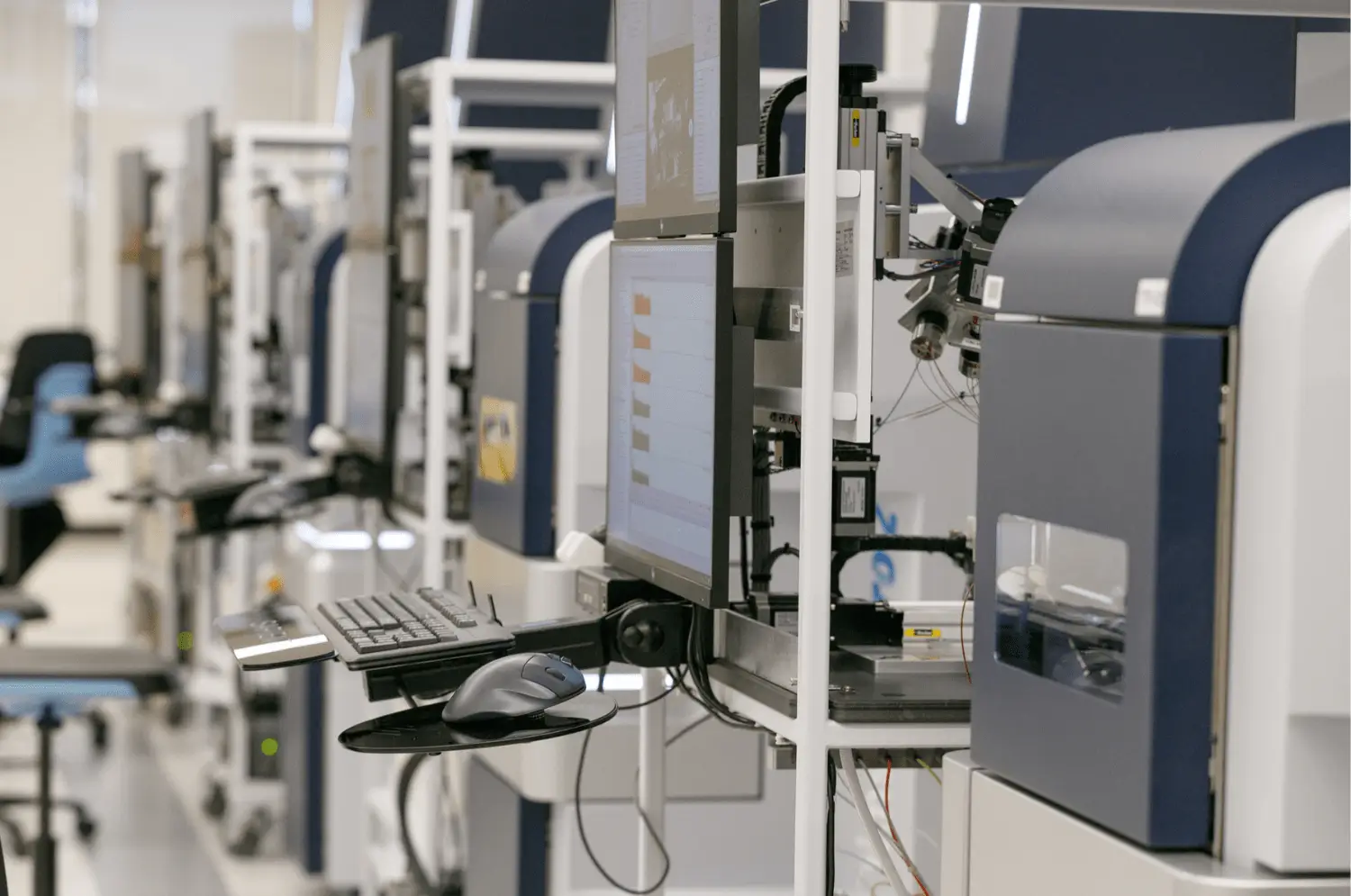
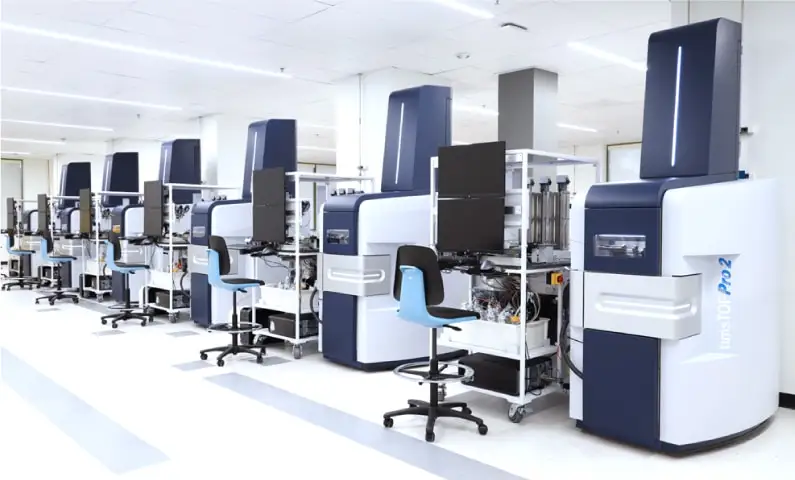
Sapient’s mass spectrometry-based workflows are optimized for coverage depth and reproducibility at scale – able to deliver the most dynamic molecular measures per sample at the resolution required to support confident decisions across discovery, biomarker development, and clinical translation. We have innovated our systems to address key throughput and sensitivity challenges of traditional mass spectrometry, enabling:
Broad molecular coverage in diverse sample matrices.
Our next-generation mass spectrometry systems leverage rapid liquid chromatography (rLC) and nanoparticle enrichment techniques to capture thousands of metabolites, lipids, and proteins in nearly any sample type, enabling deep profiling with high sensitivity.
High reproducibility with automated workflows.
Our automated sample preparation workflows enable rapid, consistent processing at scale, ensuring high‑precision handling of large sample sets while mitigating variability that can confound downstream analyses.
Rapid data processing with ML-based data software.
We leverage ML‑aided software for efficient, consistent handling of complex, large‑scale mass spectrometry datasets, accelerating insight generation while maintaining analytical rigor.
Stringent quality control for precision at scale.
Our workflows incorporate rigorous quality control metrics via a comprehensive quality matrix – which has been successfully employed across tens of thousands of biosamples.
Unlock deeper, human‑relevant biology with scalable, high‑resolution molecular measurement.
The power of Sapient’s next‑generation mass spectrometry lies not only in what it can measure, but in how those measurements are used. Combined with Sapient’s biocomputational expertise and large‑scale human datasets, our mass spectrometry data become a foundation for insights that are biologically grounded and clinically meaningful.
Coverage Expansion
Our systems are optimized to deliver high-fidelity, reproducible measures across thousands of dynamic biomarkers per sample, significantly amplifying discovery potential.
Throughput Gains
Our automated workflows and high throughput instrumentation support the analysis of thousands of samples per day, making large, statistically-powered studies practical.
Hypothesis-Free Discovery
With our nontargeted, next-generation approaches, you can reveal novel biology that strengthens and differentiates your programs.
rLC-MS for Deep Metabolomics Analysis of Population Scale Studies
See the power of Sapient’s rLC-MS platform exemplified in this study, in which the technology was applied to analyze >26,000 plasma samples to generate novel findings, including distinct metabolic phenotypes (“metabotypes”) that may predict altered disease risk and a dynamic metabolic aging clock.
Connect with our scientists to discuss your project or the biological questions you want to answer. We’re here to help you apply robust, creative omics approaches at any phase of development.